Central Indiana Water Damage Restoration · Eagle Village
When water is spreading through your Eagle Village home right now, Eagle Village Water Restoration delivers fast, around the clock emergency water damage restoration across Eagle Village and the surrounding Marion County corridor. Our IICRC certified crews handle the full job from extraction through reconstruction and coordinate directly with your insurance carrier.
Every missed call from Eagle Village gets a call back within 15 minutes.

Eagle Village Water Restoration delivers emergency water damage cleanup across Eagle Village and surrounding IN communities: same day water removal, verified structural drying, sewage and storm cleanup, and insurance claim documentation. Crews answer 24/7 at (463) 223-3831.
- Services: water damage restoration, basement flooding, sewage cleanup, storm damage
- Service area: Eagle Village, Boone County, IN and surrounding areas
- Response time: Same day for Eagle Village inquiries; 24/7 emergency service available
- Licensed and insured (License #RC21100059)
- Serving Eagle Village, IN since 2018
Schedule Your Free Damage Assessment
Our Eagle Village inspection is a room by room walkthrough designed to find every pocket of moisture, not just the obvious puddle. We measure walls at multiple heights with non penetrating meters, then confirm suspect readings with a penetrating probe, checking baseboards, trim, subfloors, insulation, behind cabinets and appliances, under sinks, around water heaters and washing machines, and along basement perimeters and slab joints. A thermal imaging camera maps temperature differentials that flag hidden moisture inside wall cavities, and a hygrometer logs ambient humidity so we know what the drying environment looks like before equipment goes in. This thoroughness exists for one reason: the most expensive problem in water restoration is moisture you missed, the kind that fuels mold colonies 30 days later. Eagle Village homes near the Eagle Creek corridor especially benefit from this depth because groundwater intrusion often shows up in places the homeowner never thinks to check.
I agree to be contacted by Eagle Village Water Restoration regarding my inquiry.
When Eagle Village homeowners search for emergency water damage cleanup, it's usually 2 a.m. and the water is still coming. Supply line failures and frozen pipe bursts don't schedule themselves. What matters in that moment is a local crew that answers, arrives with extraction equipment, and starts pulling water immediately.
Crawl spaces and basements dry differently than living areas: cooler, damper, and slower. Proper Eagle Village below grade drying pairs extraction with heavy dehumidification and, where needed, vapor barrier work, so the space stops feeding humidity into the whole house.
Questions cost nothing here. What does water damage restoration cost in Eagle Village? How long does drying take? Will insurance cover it? Call and ask, get real answers, and decide with information instead of pressure.
Payment Options That Work for You
Restoration is worth doing right the first time. Financing options through Eagle Village Water Restoration lender partners help homeowners pay over time instead of cutting scope or delaying work.
Pay for your project at a later time, but lock in today's pricing. Ideal for homeowners waiting on insurance settlements.
- No payments for 12 months
- No interest if paid in full
- Lock in current pricing today
Divide your project cost equally across 12 months with zero interest. Most homeowners choose this option for predictable budgeting.
- Equal monthly payments
- 0% interest for 12 months
- Simple, predictable budgeting
Spread your investment over up to 20 years with fixed equal payments. The right choice for larger projects or homeowners who prefer lower monthly amounts.
- Up to 20-year terms available
- Fixed equal payments
- Ideal for larger restoration projects
Subject to credit approval. Ask your project lead for current terms and promotions.
Our Eagle Village Water Damage Restoration Work
Eagle Village Water Restoration works on homes and businesses, and every job starts with a moisture check of the affected rooms.
Water Damage Restoration in Eagle Village
Serving Eagle Village: full scope residential water damage restoration including extraction, structural drying, antimicrobial treatment, and reconstruction back to pre loss condition. Performed to IICRC S500 standards by certified technicians.
Learn moreBasement Flooding in Eagle Village
For Eagle Village addresses, emergency basement water extraction, dehumidification, and structural drying for finished and unfinished basements, with documentation for insurance claims and reconstruction if needed.
Learn moreSewage Cleanup in Eagle Village
Serving Eagle Village: category 3 sewage cleanup with full containment, HEPA-filtered negative air, PPE-equipped technicians, contaminated material removal, antimicrobial treatment, and verification per IICRC S500 and S520 standards.
Learn moreStorm Damage in Eagle Village
In Eagle Village, residential storm related water intrusion response including extraction, structural drying, damaged material removal, and reconstruction after wind, rain, or hail driven water entry events.
Learn moreCommercial Water Restoration in Eagle Village
For Eagle Village addresses, commercial water damage mitigation and restoration for offices, retail, and multi tenant properties, including after hours response, content protection, and coordination with property management and carriers.
Learn moreCommercial Flood Damage Cleanup in Eagle Village
For Eagle Village addresses, large scale commercial flood extraction, drying, and recovery using commercial grade equipment scaled to building square footage, with documentation aligned to commercial insurance requirements.
Learn moreCommercial Sewage Cleanup in Eagle Village
Serving Eagle Village: commercial Category 3 sewage remediation with containment, decontamination, and disposal performed under IICRC S500 and S520 protocols, minimizing business interruption where possible.
Learn moreCommercial Mold Remediation in Eagle Village
For Eagle Village addresses, commercial mold remediation per IICRC S520, including containment, air filtration, contaminated material removal, antimicrobial treatment, and post remediation verification.
Learn moreCommercial Storm Damage in Eagle Village
In Eagle Village, commercial storm damage response covering water intrusion, structural drying, content protection, and reconstruction to return the property to operating condition.
Learn more
Local Expertise, Real Results
Built on doing the work to standard, every meter reading logged, every Eagle Village job documented the way insurance carriers expect to see it.
Eagle Village Water Restoration works Eagle Village water restorations the way an experienced project lead would build a house. Scope written before work begins. Materials and methods documented. Daily progress logged. Final verification on paper. The way restoration was always supposed to work.
Eagle Village Water Restoration serves Eagle Village homeowners and the broader Eagle Creek corridor of northwest Indianapolis with full scope water damage restoration, basement flood cleanup, sewage remediation, and storm damage recovery. Our service area covers Eagle Village, Marion County, and neighboring pockets like Eagledale, Wynnedale-Spring Hill, and Bayswater at Eagle Creek, with crews dispatched any time of day. The team is built of IICRC certified technicians on a licensed and insured crew, not partner temp work. Restoration work is what we do every day, and we have built our process around the specific failures Eagle Village homes see most: aged copper supply lines, basement seepage near the reservoir corridor, and sewer backups during heavy rain. When you call, you reach a restoration company, not a call center.
Our methodology follows the IICRC S500 standard for water damage restoration and the IICRC S520 standard whenever mold remediation enters the picture. Every Eagle Village job opens with a moisture assessment using thermal imaging and penetrating meters, so hidden saturation behind drywall, under subflooring, and inside wall cavities gets mapped before any drying equipment is staged. From there, controlled water extraction comes first, followed by structural drying with monitored air movement and dehumidification sized to the affected square footage. When contamination is present, we apply antimicrobials and verify post drying moisture content against unaffected materials before any reconstruction begins. The rigor is what protects you from a callback six weeks later.
Our Promise
Eagle Village homeowners get three commitments from Eagle Village Water Restoration. First, fast emergency response, dispatched day or night, because every hour without extraction expands the damage. Second, IICRC certified technicians trained to the S500 standard, working with calibrated meters and commercial drying equipment, not guesswork. Third, a free on site inspection before any work begins, with clear written scope and direct coordination with your insurance carrier if you have an active claim. That is the baseline we hold ourselves to on every Eagle Village call.
Why This Eagle Village Crew and Not Another
Certified restoration work, thorough moisture mapping, and upfront written scope, this is what Eagle Village homeowners get when they call our crew.
Around the Clock Emergency Dispatch
Water damage in Eagle Village does not wait for business hours, and neither do we. Our 24/7 emergency line connects you to a crew with a fully stocked truck, commercial extraction equipment, and a certified lead tech ready to begin work on arrival. Fast response limits the spread, protects salvageable materials, and shortens the total dry out timeline.
IICRC S500 Trained Technicians
Our crews are IICRC certified and trained to the S500 water damage restoration standard, which dictates how Category 1, 2, and 3 losses are classified, contained, and dried. In practice, that means meter readings get logged, drying targets are based on unaffected material baselines, and we do not pull equipment until structures verify dry. The certification is your protection against shortcuts.
Mitigation Through Reconstruction
Most restoration companies dry the structure and hand the rebuild off to a separate contractor. We handle the full scope for Eagle Village homeowners: extraction, drying, mold remediation when needed, then drywall, flooring, paint, and trim back to pre loss condition. One project manager, one schedule, less calendar lost between phases.
Insurance Carrier Coordination
We document every Eagle Village job the way adjusters expect to see it: photos before mitigation, written moisture maps, daily drying logs, scope justified per S500. We work with your insurance carrier directly, talk through scope with the adjuster, and keep the paperwork moving so your claim does not stall. You stay informed without having to translate restoration jargon.
Real Jobs. Real Results.
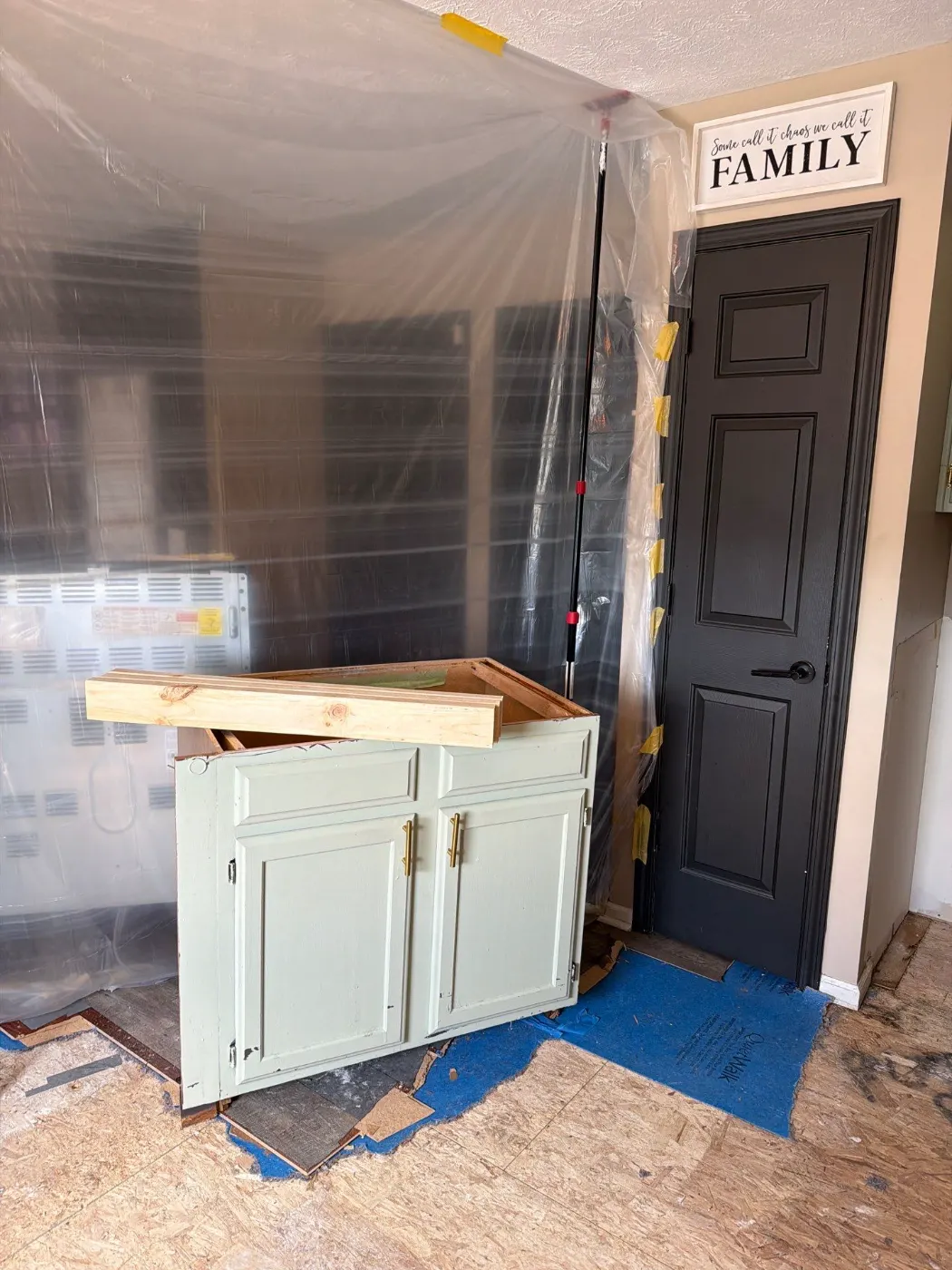
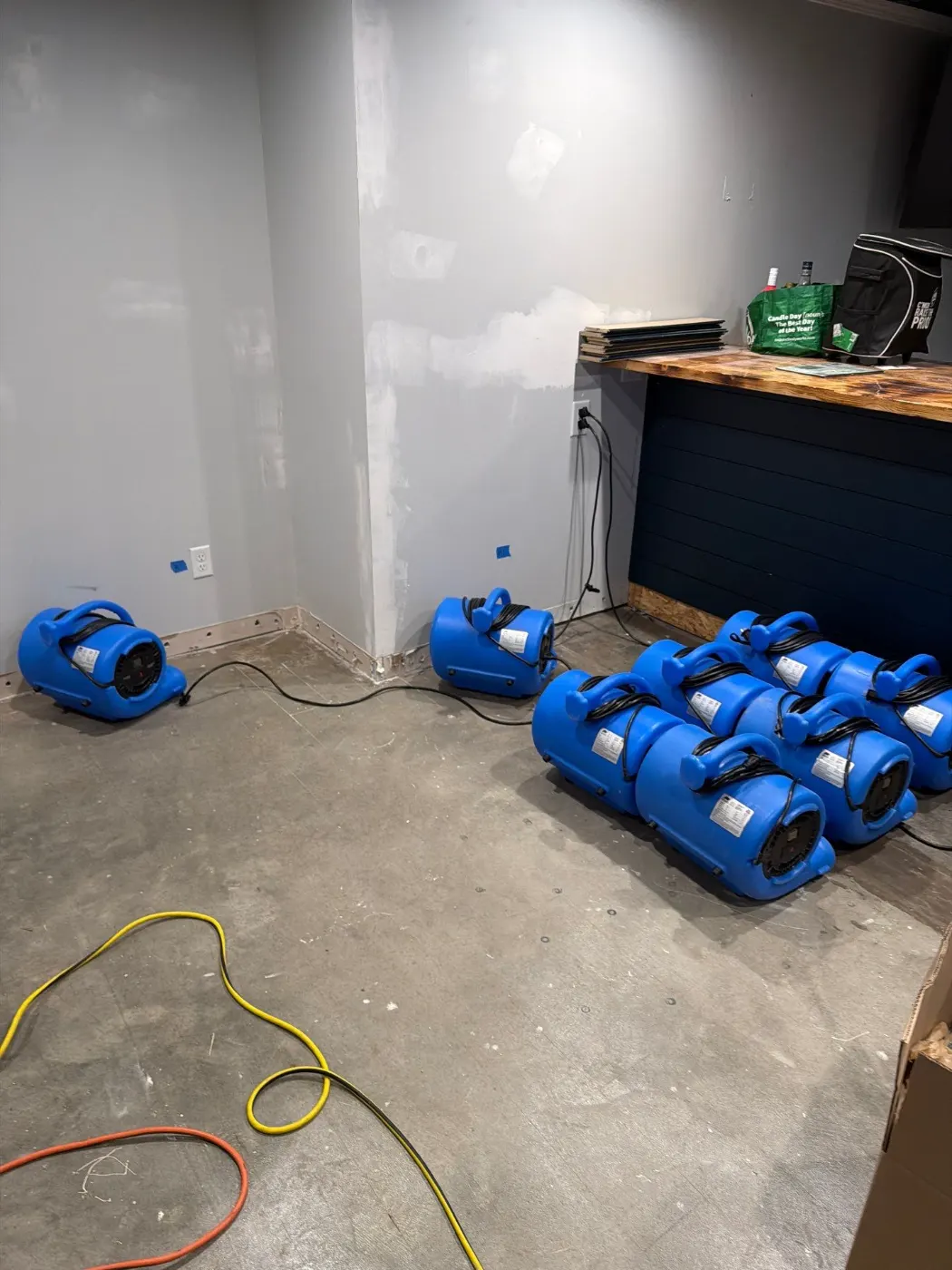
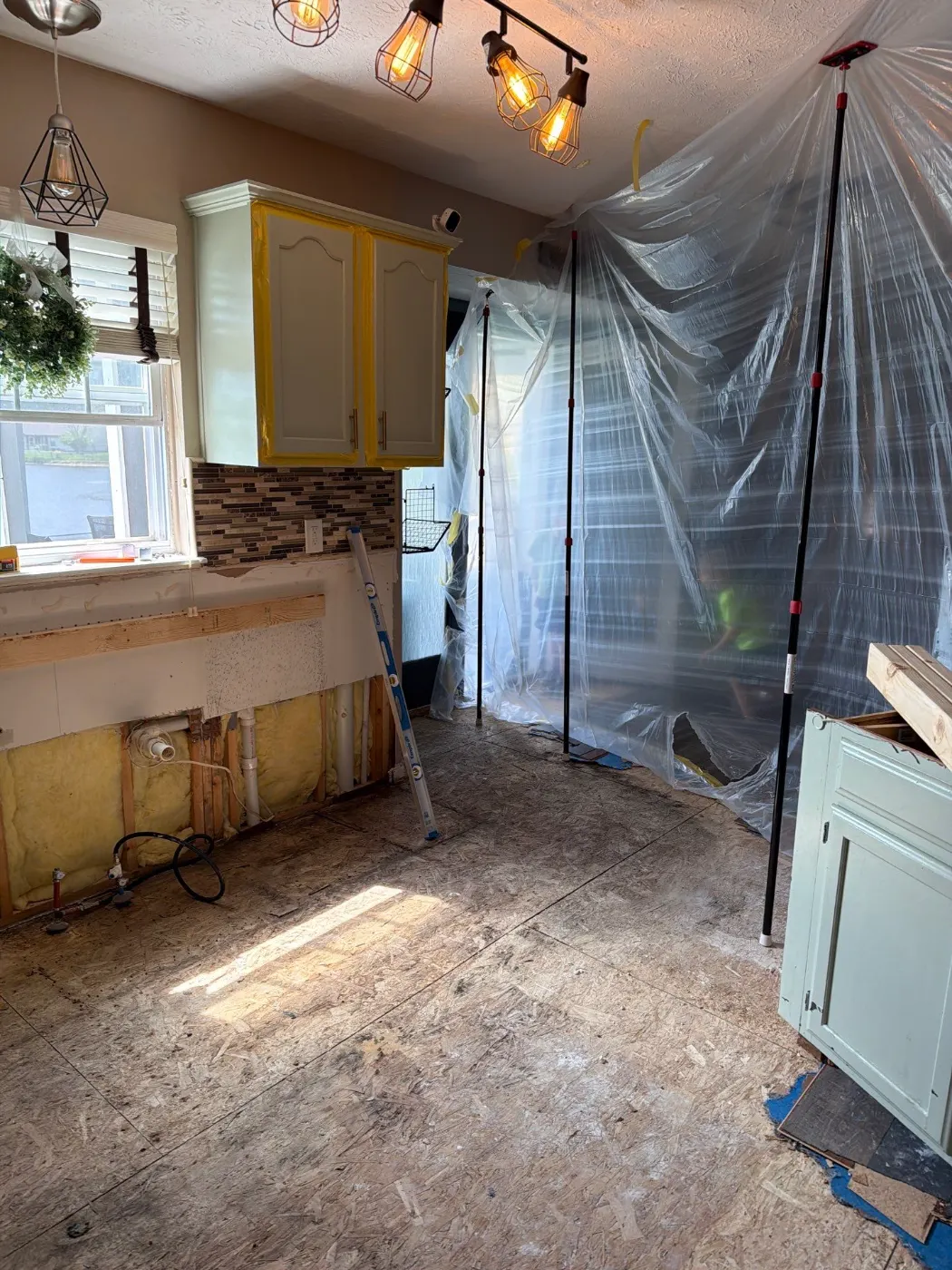
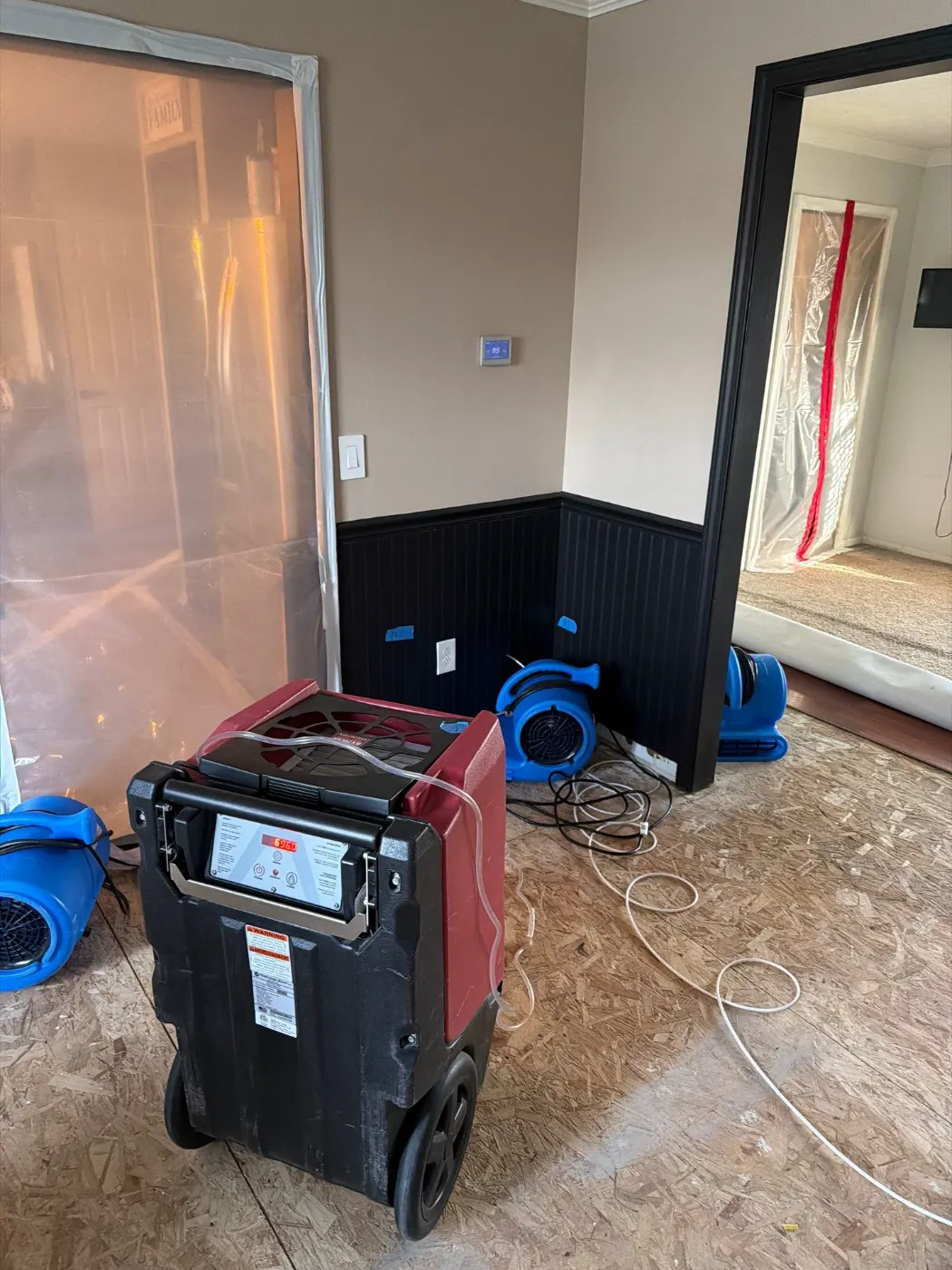
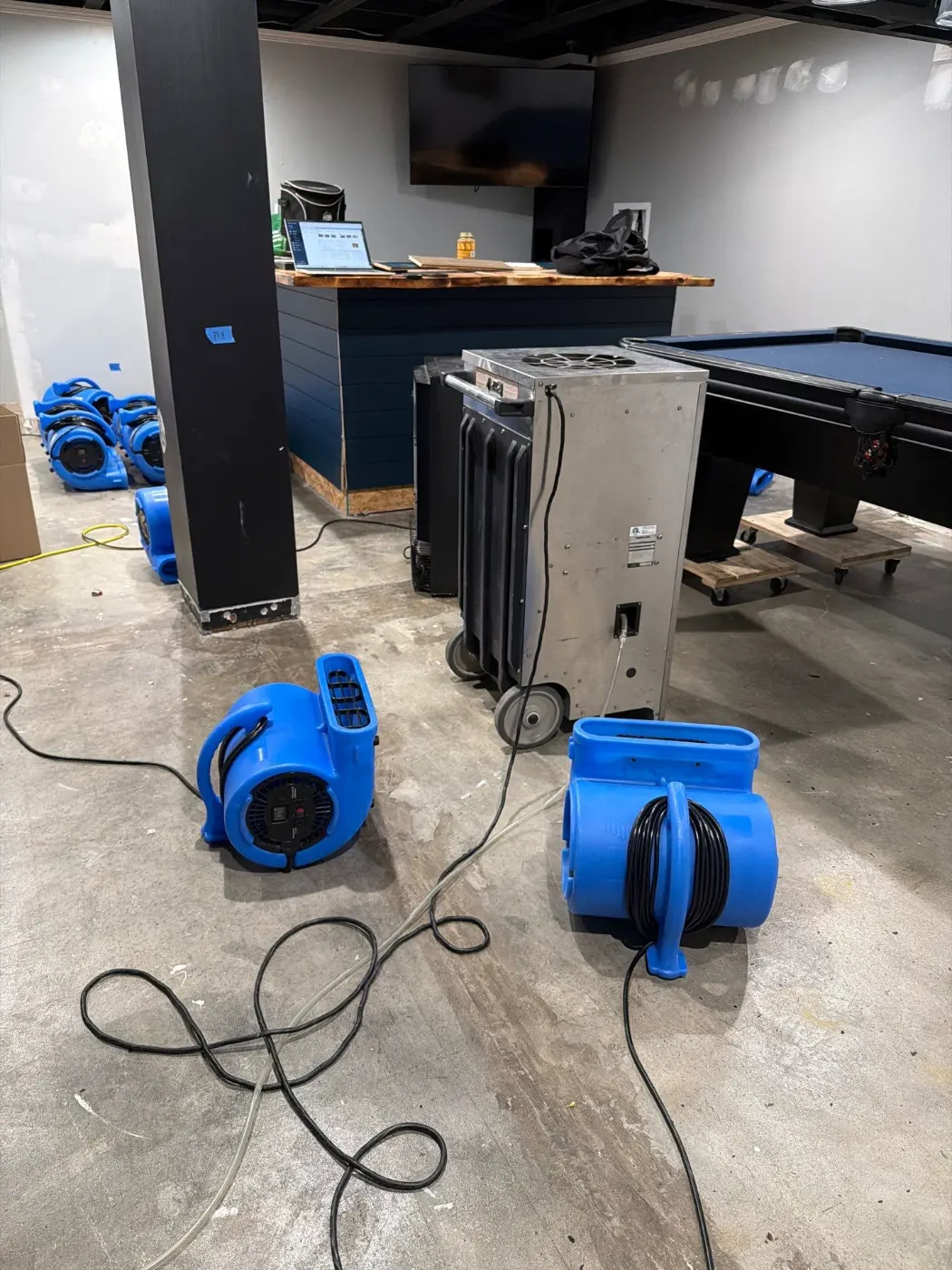
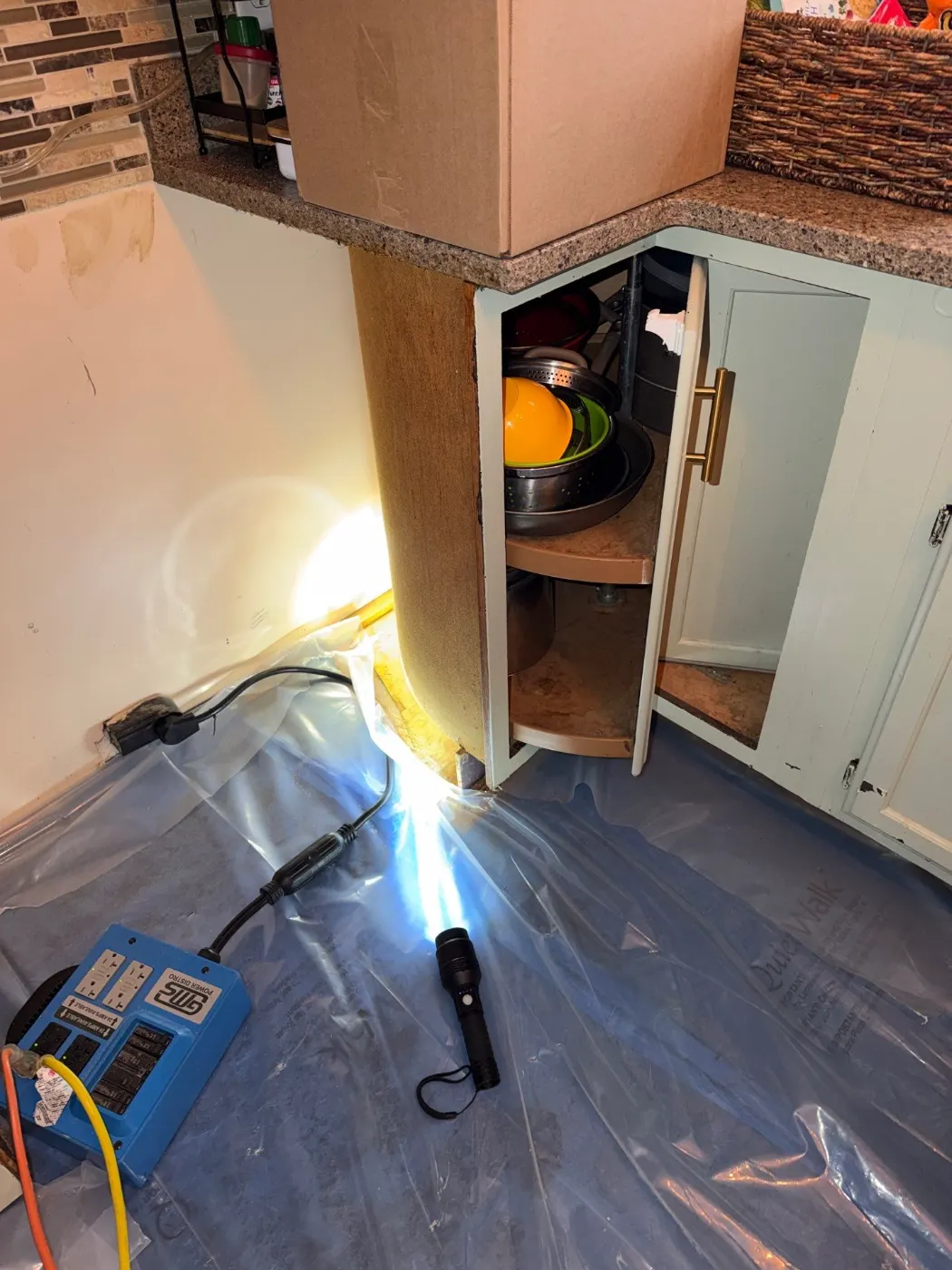
Real restoration projects from Eagle Village homes and the surrounding Marion County service area, from burst pipes to basement floods to full Category 3 sewage remediation jobs.
The First Hour in Your Eagle Village Home, and Everything After
Every Eagle Village job opens with a moisture assessment and Category determination. A certified technician walks the property, runs thermal imaging across affected rooms, takes meter readings at logged points, and traces the source, whether that is a broken copper supply line, a failed washing machine hose, a sewer backup, or storm water that entered through a foundation seam. The water is classified Category 1 (clean), Category 2 (gray), or Category 3 (black) per IICRC S500, and the full scope of damage is mapped before any drying equipment is positioned. This phase typically takes one to two hours and shapes everything downstream.
Once scope is documented, we move to insurance coordination. Every affected area is photographed and video documented before mitigation begins, a written moisture map with meter readings is logged, and we make direct contact with your insurance adjuster to align the scope of work with your coverage. Mitigation steps are justified in language adjusters recognize from the S500 standard, which speeds up approvals. Most Eagle Village homeowners never have to translate restoration jargon to their carrier, we handle the technical paperwork directly so you can focus on getting your household back to normal.
Then comes drying execution and controlled reconstruction. Air movers and dehumidifiers are positioned based on structural drying calculations for the affected square footage, with daily monitoring and logged readings until materials hit dry standard, matching the moisture content of unaffected areas. Demolition happens only where saturated materials cannot be dried in place, like soaked insulation or warped subfloor. Once verified dry, reconstruction begins: drywall hung and finished, flooring replaced, trim and paint restored. The goal is to put the Eagle Village home back the way it was before the loss.
Rapid Emergency Dispatch
When you call our 24/7 line, a crew rolls with extraction equipment, dehumidifiers, air movers, and meters already on the truck. A certified lead technician runs the scene from arrival, so the first hour is productive, not diagnostic. Fast deployment is the single biggest factor in limiting damage spread.
S500 Category Determination
Per IICRC S500 protocol, we classify the water as Category 1, 2, or 3 based on source and contamination, document meter readings, and produce a written assessment. That classification drives PPE, containment, and whether materials are dried in place or removed. Nothing is guessed.
Insurance Carrier Partnership
For Eagle Village homeowners with an active claim, we work directly with your insurance carrier, justify scope against the S500 standard, and provide the documentation adjusters need. Nothing lands on the invoice mid job. You stay informed at every approval step.
Drying to Verified Standard
Drying equipment runs with daily monitoring and logged moisture readings. Materials are confirmed dry against unaffected baseline measurements before reconstruction begins. That verification is what prevents the hidden mold problem that shows up weeks after a rushed dry out.
Why Water Shows Up in Eagle Village Homes
Burst Supply Lines
Burst supply lines in Eagle Village homes happen most often in unheated wall cavities and crawlspaces. The combination of Indiana winter temperatures and inadequate pipe insulation means dozens of these calls each winter.
Tub and Shower Pan Leaks
Tub surrounds leak at the spout penetration, at the valve escutcheon, and where the deck meets the wall. Any of the three puts water behind the surround, soaking framing and subfloor without ever running across the bathroom floor.
Refrigerator Ice Maker Line
When a line fails while the family is away, the ice maker keeps calling for water and the line keeps delivering it. That is how a small tube produces a whole floor loss. Closing the shutoff before a trip takes about a minute.
Roof Leak Reaching the Ceiling
By the time water shows on a ceiling it has already crossed the attic. It runs down a rafter, wets the insulation, and drops through the drywall at the low point, which is often several feet from where it came through the roof.
Water Heater Tank Failure
A tank that lets go does not drip. It empties, and the utility room, the finished space beside it, and the carpet past that all take the load at once. Eagle Village homes running a heater past its rated service life are the ones we get called to.
HVAC Condensate Line and Pan
Furnace and air handler leaks look like roof leaks and are not. They appear on clear days, they run during cooling season, and the wet path starts at the equipment rather than at a penetration. Getting the source right decides who fixes what.
How to Protect Your Eagle Village Home in the First Hour of a Water Leak
Your first job is to stop more water from coming in, and your second is to keep everyone safe from what's already there. After that, a few small moves protect your floors and furniture until our crew gets to your Eagle Village home.
1. Find your main shutoff
In homes with a basement, the main shutoff is usually on the wall closest to the street. In homes without one, look in a utility closet or near the water heater. Close it and leave it closed until the leak is fixed.
2. Turn off power to wet rooms
Switch off the breakers for wet rooms only when you're standing somewhere dry and the panel is dry too. When the panel sits in a flooded basement, leave it alone and call your electric utility from upstairs.
3. Keep everyone on dry ground
Set up a spot in a dry part of the house for kids and pets while you work through this list. Floodwater and sewage both carry germs, and wet stairs and floors are easy to slip on.
4. Get belongings off the floor
Lift loose items and boxes onto a table or a bed in a dry room. Storage bins with snap lids can wait a little longer, but open cardboard boxes should come out of the water first.
5. Pull up rugs and mats
Wet area rugs and bath mats hold water against the floor. Roll them up and move them to a garage or a dry room, and set any furniture that stays behind on foil squares to keep stains off the carpet.
6. Leave wet drywall and carpet in place
It's tempting to start pulling things out, but leave wet drywall and carpet where they are. Our crew takes the damage photos and moisture readings before anything is removed, and that record goes into your photo report.
7. Soak up clean water
If the water came from a supply line or the water heater, you can blot it with towels and mop the floor. A wet and dry shop vac works for clean water too. Leave any water from a sewer or a floor drain for the crew.
8. Call before the water spreads further
The sooner the crew starts drying, the more of your floors and walls can be saved. Call as soon as the water is off, even late at night, since our dispatch line runs 24/7.
Keep this list handy, and call us as soon as the water is shut off so the crew can start drying your home.
Three Simple Steps
Each step below gets documented, so you can see where the work stands at any point.
Immediate Dispatch
Speed is the cheapest thing we bring. Extraction units and containment are standard load out on every call. Reach us on the 24/7 line and dispatch happens within 2 hours, not next business day.
Mapping the Damage
Category drives PPE, containment, and what can be saved. Getting this right is cheaper than getting it fast.
Restore the Home
Eagle Village dry outs average 3 to 5 days, ended by meter readings rather than schedule. Nobody signs off until the numbers do.
How the Photo Report Helps You Decide What Comes Next in Eagle Village
A photo report puts what's inside your walls and floors in front of you in pictures and numbers. We build it from the first visit through the last day of drying, then go over it with you in plain language.
The source, in pictures
Whether it was a cracked pipe or a sump pump that quit, the first photos in the report show the source up close and in the context of the room around it. That helps your plumber see the same thing we saw.
How far the water traveled
Water moves under flooring and up into drywall farther than it looks from the doorway. The crew checks walls and floors with moisture meters, and the report marks which areas read wet and which read dry.
Pictures you can keep
Every photo in the report comes from our crew, taken on site during each visit. You keep a copy of the full set, which is handy if you sell the house later and a buyer asks about the water damage.
Saving what can be saved
Drying in place is usually less disruptive than tearing out and replacing, and the readings show when it's possible. The report notes what the crew is drying in place and what it plans to remove, with photos of both.
Progress you can follow
Each visit adds a new set of readings and photos, so the report shows the drying day by day. If one spot dries slower than the rest, you'll see it in the numbers along with what the crew is changing to fix it.
A conversation in plain words
The report comes with an explanation. We go over the photos and readings with you and answer questions as they come up, so the moisture numbers make sense to you.
Sharing the report
The report is yours to share with anyone you choose. We document damage with a photo report and walk you through what we found, so you can decide with your insurance company, and your own policy spells out what it covers.
Call our dispatch line, and the crew will begin your photo report as soon as they reach your Eagle Village home.
Questions Worth Asking Before Work Starts in Eagle Village
Use these questions with any water damage company you call in Eagle Village.
Can I see an itemized estimate?
Ask for every line item in writing. Many insurers price water losses in Xactimate, so an estimate in that format is easier for an adjuster to review.
Does my policy require a certain company?
Ask your adjuster before you sign anything, and read the work authorization so you know what you're agreeing to.
What happens if you find mold?
Ask how mold behind walls or under floors gets handled, and whether that work is priced apart from the drying.
Who handles repairs after drying?
Ask who replaces drywall, flooring, paint and trim once the structure is dry, and whether one company can do both stages.
Who will be working in my home?
Ask whether the crew works for the company you called or for a subcontractor, and who's in charge on site each day.
How will you show me it's dry?
Ask for moisture readings on the first visit and the last one, so you can see the numbers reach dry standard.
Indiana Weather Drives Restoration Calls Year Round
Indiana weather drives a steady share of Eagle Village water damage calls year round. Winter freeze thaw cycles burst aging copper supply lines in crawl spaces, spring saturation pushes groundwater through basement perimeters near the Eagle Creek corridor, and summer thunderstorm cells overwhelm older drainage in a matter of hours.
Winter Pipe Bursts
Central Indiana freeze thaw swings put older Eagle Village homes at real risk, especially copper supply lines running through crawl spaces and uninsulated exterior walls. When temperatures drop hard and rebound fast, pipes split and often do not leak until the thaw, sometimes at 2 AM. We dispatch immediately, stop the spread, extract standing water, and begin structural drying the same visit.
Spring Saturation Flooding
Spring rain stacks up fast across Marion County, and properties along the Eagle Creek corridor see saturated soil push groundwater through foundation walls and slab joints. Basement seepage in Eagle Village often starts as a damp perimeter and escalates into inches of standing water overnight. We extract, dehumidify the basement envelope, and treat affected materials before mold takes hold.
Severe Thunderstorm Intrusion
Summer storm cells can drop heavy rain in short windows, overwhelming gutters, window wells, and aging drainage. Water finds its way through compromised seals, around foundation penetrations, and into basements that were dry yesterday. When called, we contain the intrusion zone, extract, dry the affected structure, and document the loss for your insurance carrier.
Sewer Backup from Storm Surge
Heavy rain events can overwhelm older sewer laterals in the Eagle Village area, pushing Category 3 black water back through floor drains and basement fixtures. This is a containment job from the first minute: sealed barriers, HEPA-filtered negative air, full PPE per IICRC S520, contaminated materials removed and bagged. Sewage cleanup in Eagle Village is not a DIY situation, and we treat it accordingly.
Where Our Crews Work in Eagle Village
Each Eagle Village neighborhood below has its own mix of home ages and basements. Open one to see what that means for water damage.
Where we respond near Eagle Village
These are the towns near Eagle Village where our crews answer water damage calls day and night.
Restoration Considerations Specific to Eagle Village
The housing stock, the weather, and the failure points we see here.
About Eagle Village Homes
Eagle Village is a small residential neighborhood in Indianapolis (Marion County) in the Eagle Creek area of northwest Indianapolis; surrounding homes in this corridor were predominantly built between the 1970s and 1990s, with plumbing transitioning from copper to early PEX depending on build decade. Homes from the 1970s,1980s typically feature copper supply lines, while later 1990s construction may include early PEX installations. The neighborhood features a mix of single family homes and apartments on modest lots, consistent with the broader Eagle Creek northwest Indianapolis corridor where custom builds with brick and vinyl siding exteriors and attached two car garages are common. The area's proximity to Eagle Creek and its reservoir means some properties sit near wetland adjacent terrain, increasing basement moisture and groundwater intrusion risk.
Where We Work in Eagle Village
We cover homeowners across Eagle Village near Eagle Creek Park, Eagle Creek Reservoir, Eagle Creek Golf Club, Pike High School, Deer Run Elementary School, Go Ape Zipline at Eagle Creek Park, Indianapolis Rowing Center, Rick's Café Boatyard.
Surrounding Areas We Serve
Our crew also covers Eagledale, Snacks/Guion Creek, Wynnedale-Spring Hill, Eagle Creek Woods, Bayswater at Eagle Creek, The Village at Eagle Creek.
Recent Weather Patterns
Indiana experienced six major floods between January 2008 and March 2009, with the June 2008 flood being the most destructive statewide, affecting over 25,000 people and exceeding $1 billion in damage. The Eagle Creek corridor in Indianapolis has historically faced flood risk from Eagle Creek and its levee system; Indianapolis floodplain officials have noted that older drainage infrastructure,designed for past rainfall patterns,may now contribute to flooding in previously unaffected areas during heavy storm events.
What Our Crew Sees in Eagle Village
Eagle Village sits within the Eagle Creek area of northwest Indianapolis, where the Eagle Creek Reservoir and its associated levee system provide some flood mitigation, but properties near the creek corridor remain exposed to groundwater intrusion and basement seepage during heavy rain events. The housing stock, largely built in the 1970s,1990s, carries risk of aged copper plumbing failure and galvanized sewer lateral deterioration that can trigger sewer backups during storm surges. Central Indiana's freeze thaw cycle,with temperatures swinging between hard freezes and rapid thaws,creates recurring burst pipe risk in older homes, particularly in crawl spaces and uninsulated exterior walls common in this building era.
The Eagle Village Area
According to U.S. Census data, Eagle Village (Indianapolis) has approximately 234 residents, making it a small, tight knit enclave within the broader Eagle Creek community of northwest Indianapolis. The wider Eagle Creek neighborhood is characterized by families and young professionals who primarily own their homes, consistent with a suburban, owner occupied housing profile.
How a Water Loss Gets Handled in Eagle Village Homes
A plain breakdown of what each phase of the work covers.
Our emergency response phase for Eagle Village water damage begins the moment the truck arrives. On board: commercial water extraction equipment sized for the loss, commercial dehumidifiers matched to affected square footage, professional air movers, calibrated moisture meters, and a thermal imaging camera. Extraction begins promptly on site, with structural drying setup completed the same day for most Category 1 and Category 2 losses. From there, daily monitoring with logged readings tracks progress until materials verify dry. The homeowner experience matters too: we contain work zones with plastic, protect unaffected areas, and walk you through what to expect each day. Clear communication is part of the job. You should not be guessing what is happening in your own home while restoration is underway, and that holds for every Eagle Village call we take.
Specialized containment applies whenever Category 3 water is involved (sewage backup, floodwater, long stagnant water with biological contamination) or whenever full mold remediation is needed per IICRC S520. Containment is built floor to ceiling with 6-mil plastic barriers, entry points sealed, and negative air machines pulling contained air through HEPA filtration before exhausting outside the work zone. Technicians wear full PPE: Tyvek suits, N95 or P100 respirators per S520, nitrile gloves, and eye protection. Contaminated porous materials are cut and bagged for disposal, antimicrobial is applied to remaining structure, and when warranted we conduct post remediation verification with air sampling. This is the phase where IICRC certification matters most. Corner cutting on a Category 3 or mold job causes the long term health and structural problems that surface months later.
Reconstruction is where we finish what mitigation started. The same crew that performed extraction and drying handles the rebuild: drywall hung, taped, mudded, sanded, primed, and painted; flooring replaced, whether that is carpet and pad, vinyl plank, hardwood refinishing, or tile reset; trim and baseboards reinstalled or replaced; cabinetry repaired or swapped; doors rehung; electrical and plumbing finish work coordinated with the appropriate trades. You get one project number from the first call through final walk through, one project manager to talk to, one schedule, and one final invoice. The alternative, common in this industry, is a handoff to a separate general contractor after drying. Two crews, two schedules, two billing cycles, and the home sits in demolition while the next contractor gets up to speed. We do not work that way.
Can You Stay in Your Eagle Village Home While It Dries Out?
Once the water is out, the drying equipment stays in your Eagle Village home for several days, and in many cases you can stay there with it. Knowing what to expect from the noise and the power use makes those days easier.
What each machine does
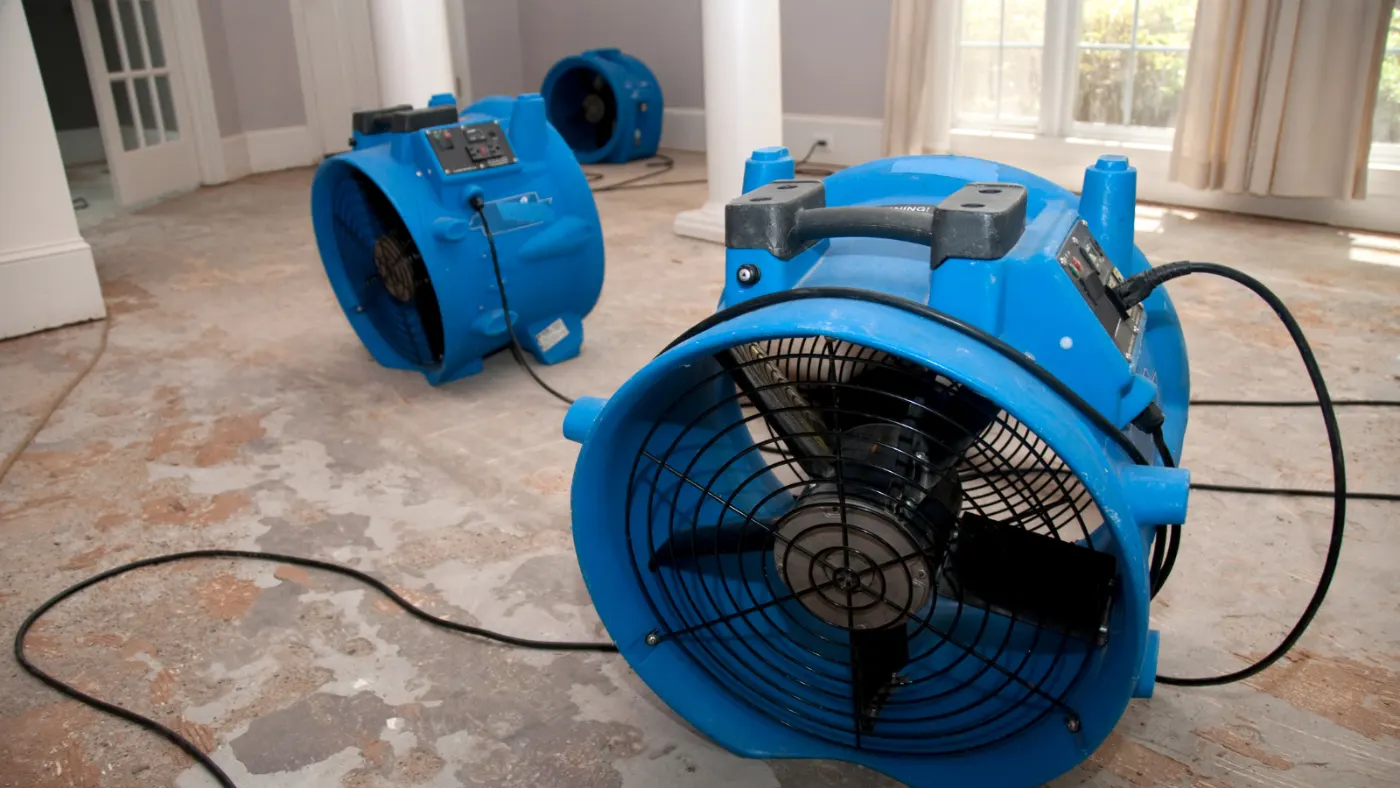
Air movers push air across wet floors and walls so the water evaporates, and dehumidifiers pull that moisture back out of the air. The two kinds of machines work as a pair, so both need to keep running.
Set units back the way they were
The crew places each unit based on where the readings are wettest. If you bump one or need to get past it, set it back the way it was, aimed at the same spot.
Keep the room set up the same way
The crew will tell you which doors to keep closed and where to set the thermostat. Drying works by controlling the air in the room, so keeping it the way it was set up keeps the drying on schedule.
Your electric bill
Running several machines for days will raise your electric bill for that month, and that's a normal part of drying a home. The crew removes each unit as soon as the readings say its area is dry.
Keep kids and pets clear
Keep children and pets away from the cords and the warm air coming off the machines. If a room is sealed off with plastic, leave the plastic up until the crew takes it down.
What the daily check covers
On each visit the crew takes new moisture readings in the same spots as before and moves or removes equipment based on what the numbers show. Those readings go into your photo report, so you can see the change from one day to the next.
Why the drying starts right away
EPA says it's important to dry water damaged areas and items within 24 to 48 hours to prevent mold growth. That's why the crew sets up drying equipment on the first visit and checks it each day after.
When the equipment comes out
The equipment comes out when the readings show the materials are dry, and the crew shows you those readings before they pack up. If anything needs repair, that work gets scheduled once the drying is finished.
Call us with any question about the equipment, and we'll help you sort it out over the phone or on the next visit.
Water damage pricing in Eagle Village
Mitigation ranges calibrated to the Eagle Village market. Final pricing depends on water volume, materials affected, and IICRC Category.
Eagle Village Water Restoration is powered by Indy Roof & Restoration
Indy Roof & Restoration operates this site and performs the work. 2018 is when they started in central Indiana, and Eagle Village has been in the service area ever since. Check the reviews yourself: 2,380+ of them, on Google.
Licensed and insured · License #RC21100059
Certifications and ratings include BBB A+ Rated · Owens Corning Preferred Contractor · Malarkey Certified Contractor. Their work has drawn coverage from FOX59, WISH TV, and RTV6. Community work is part of the job, most recently Habitat for Humanity, Toys for Tots, the annual school supply backpack drive, and local youth sports and school programs across central Indiana.
What Eagle Village Homeowners Probably Want to Know
Read through these, then call us with anything they leave open about your Eagle Village home.
Expert Eagle Village Restoration Crews Available Now
If water is spreading through your Eagle Village home right now, or you suspect hidden moisture after a recent storm, call Eagle Village Water Restoration for fast emergency dispatch. The on site inspection is free with no obligation, and we coordinate directly with your insurance carrier from the first visit.