Commercial Flood Damage Cleanup in Eagle Village, IN
Commercial flood damage cleanup in Eagle Village with desiccant drying for concrete and masonry, and daily readings you keep on file.
Eagle Village Water Restoration is the Eagle Village call for Commercial Flood Damage Cleanup: emergency crews around the clock, moisture readings instead of guesswork, and insurance files built properly. Call (463) 223-3831.
- Service: Commercial Flood Damage Cleanup for Eagle Village homeowners
- Service area: Eagle Village, IN and surrounding areas
- Response time: Fast local response for Eagle Village; live dispatch every hour of the year
- Licensed and insured (License #RC21100059)
- Serving Eagle Village, IN since 2018
Commercial Flood Cleanup in Eagle Village
When floodwater reaches a commercial building in Eagle Village, we'll pump it out and dry the structure section by section.
Flood Exposure Here
Flood risk here runs highest for sites close to Eagle Creek. Your building's own flood exposure gets mapped when we walk the site with your facilities contact.
Our flood crews work commercial sites throughout Eagle Village, including the blocks around Deer Run Elementary School and Eagle Creek Golf Club. We also handle commercial flood cleanup in Wynnedale-Spring Hill and Snacks/Guion Creek.
Commercial Flood Damage Cleanup for Eagle Village Businesses
Concrete holds water longer than anything else in a commercial building, and the flooring you put back is what eventually tells you whether the slab was ready. Eagle Village Water Restoration dries commercial slabs in Eagle Village to a measured number, using in situ relative humidity probes and surface readings taken from the same marked spots every day, so the VCT or carpet tile goes down over concrete that's been proven dry on paper.
The file Eagle Village Water Restoration builds on a commercial flood loss runs to photographs by area and phase, readings by location and material, equipment hours by room and a contents inventory. It's organized so you, ownership or a commercial adjuster can find any piece of it without calling the office. You get the whole thing for your Eagle Village property.
After the debris is gone, the exposed structure of your Eagle Village building gets washed from the top of each wall down to the floor. Concrete and block are scrubbed with detergent and rinsed so the residue runs to the floor, where it's extracted with the rinse water. Any antimicrobial goes on afterward, once the surface is clean.
Flood policies and property policies each set their own notice requirements, and proof of loss paperwork can carry short deadlines. Report the loss as soon as the water is under control, and ask the carrier to confirm every deadline in writing. Eagle Village Water Restoration supplies the photographs and readings for your Eagle Village property that the paperwork draws on.
You don't have to decide the whole project on the phone. Eagle Village Water Restoration will dispatch a crew to your Eagle Village building within two hours, pump the standing water, map what's wet, and give you a written scope before anything structural comes out. That's enough to stop the loss from growing while you talk to your carrier and your ownership group about the rest.
Signs You Need Commercial Flood Damage Cleanup
If you notice any of these in your Eagle Village building, schedule a free inspection before the issue worsens.
Mud or silt left on the floor after floodwater pulled back from the building
Acoustic ceiling tiles stained brown or sagging out of the grid in a line under a pipe run
Beads of moisture under plastic sheeting or mats taped to a concrete floor for a day or two
Repeated tenant or staff complaints of a damp smell in one suite while the rest of the floor is fine
A musty or sour smell strongest at return air grilles or when the air handlers first start up
Silt packed into trench drains and floor drains after a flood
Brown waterline marks across the walls of a lower level at the same height in every room
Water staining on stairwell walls or landings leading down to a basement or garage level
Floors that stay cold and damp for days after the water is gone, even with the HVAC running
Pallet bottoms dark and soft, with cardboard cases on the lowest layer collapsing under weight
How Eagle Village Water Restoration Handles Commercial Flood Damage Cleanup
We follow these steps in order on every Eagle Village job.
Staged Water Drawdown
Below grade levels get pumped down in stages while the soil outside is still saturated. The crew pauses between passes to check walls and slab, and logs the water level each time.
Content Pack Out
Fixtures, records, equipment and stock come off the wet slab and get listed by item and condition. Anything needing controlled conditions goes to climate controlled storage under a numbered list, so what left the building is documented before it moves anywhere.
Mud and Silt Removal
Mud goes into containers first, starting at the far end of the building and working toward the exit. Wet vacuums and a rinse pass follow, and floor drains get flushed and checked so water can drain freely.
Removing Soaked Materials
Porous materials soaked by floodwater, such as carpet and drywall, come out to the height the readings call for and get bagged where they fall. Each area is photographed before and after, and quantities go in the log.
Cleaning the Structure
Concrete and block that stood in floodwater are washed with detergent from the top of the wall down and rinsed out. An antimicrobial treatment follows when the scope includes one, so drying starts on a clean surface.
Commercial Flood Damage Cleanup in Eagle Village
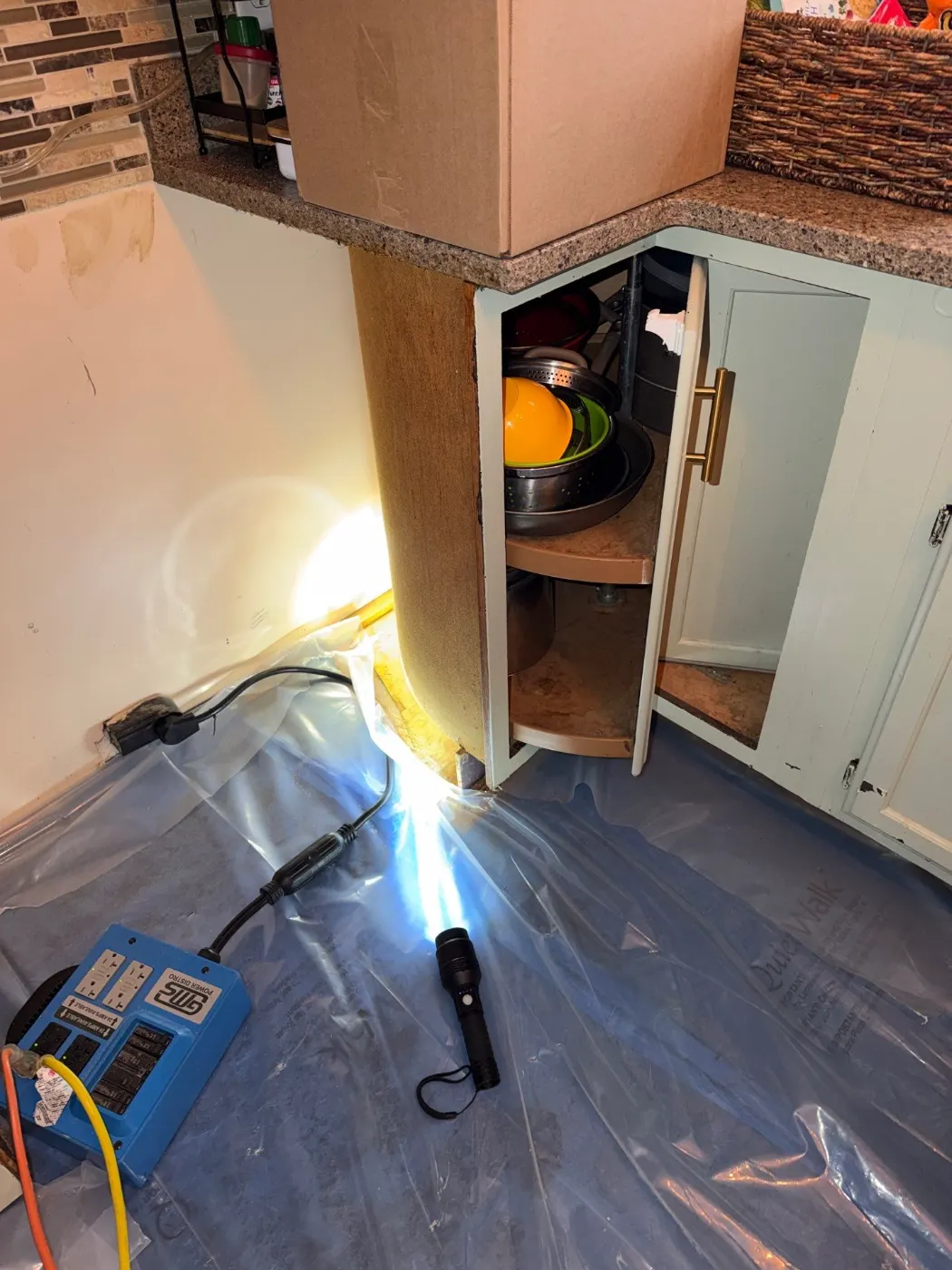
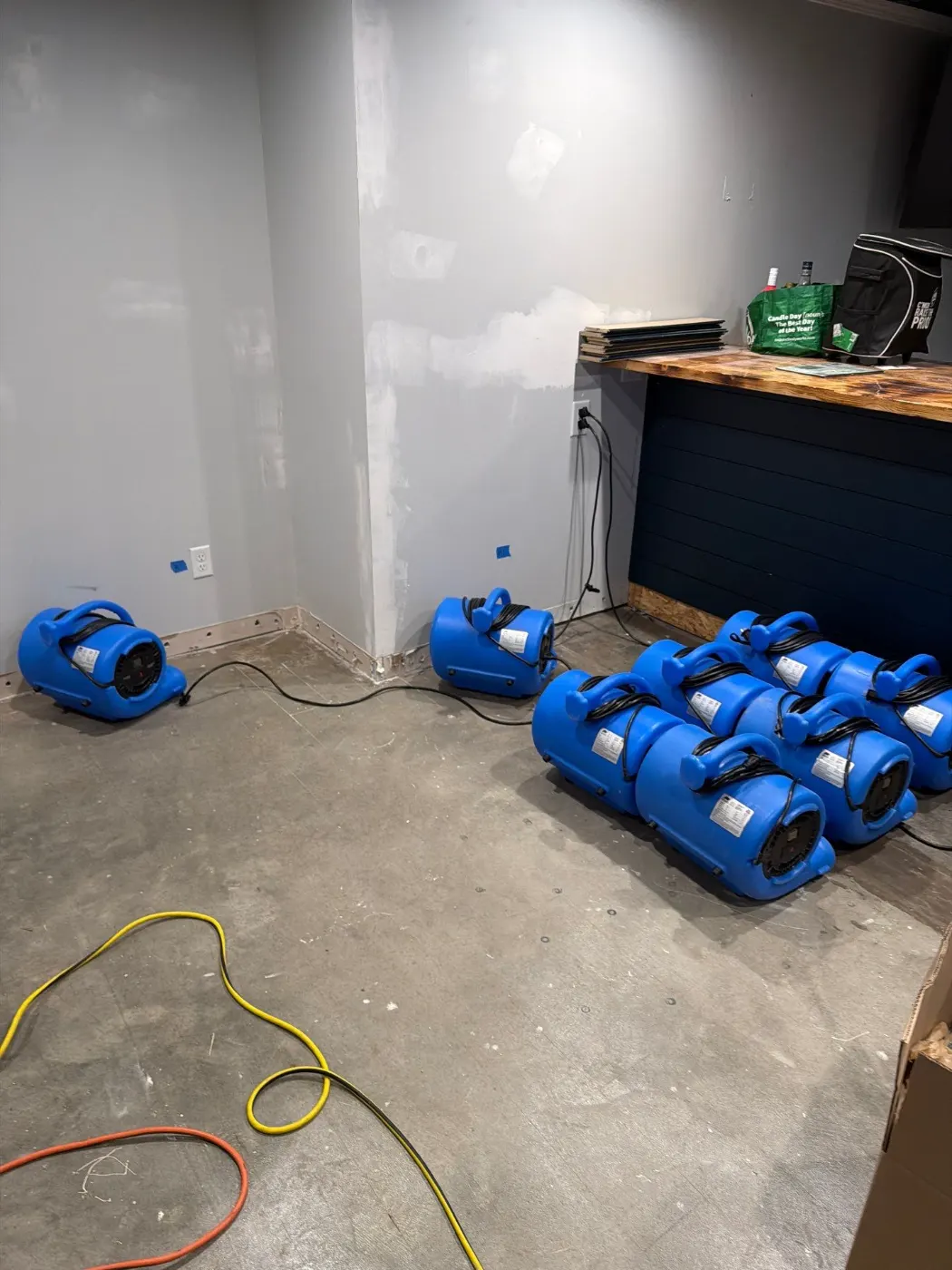
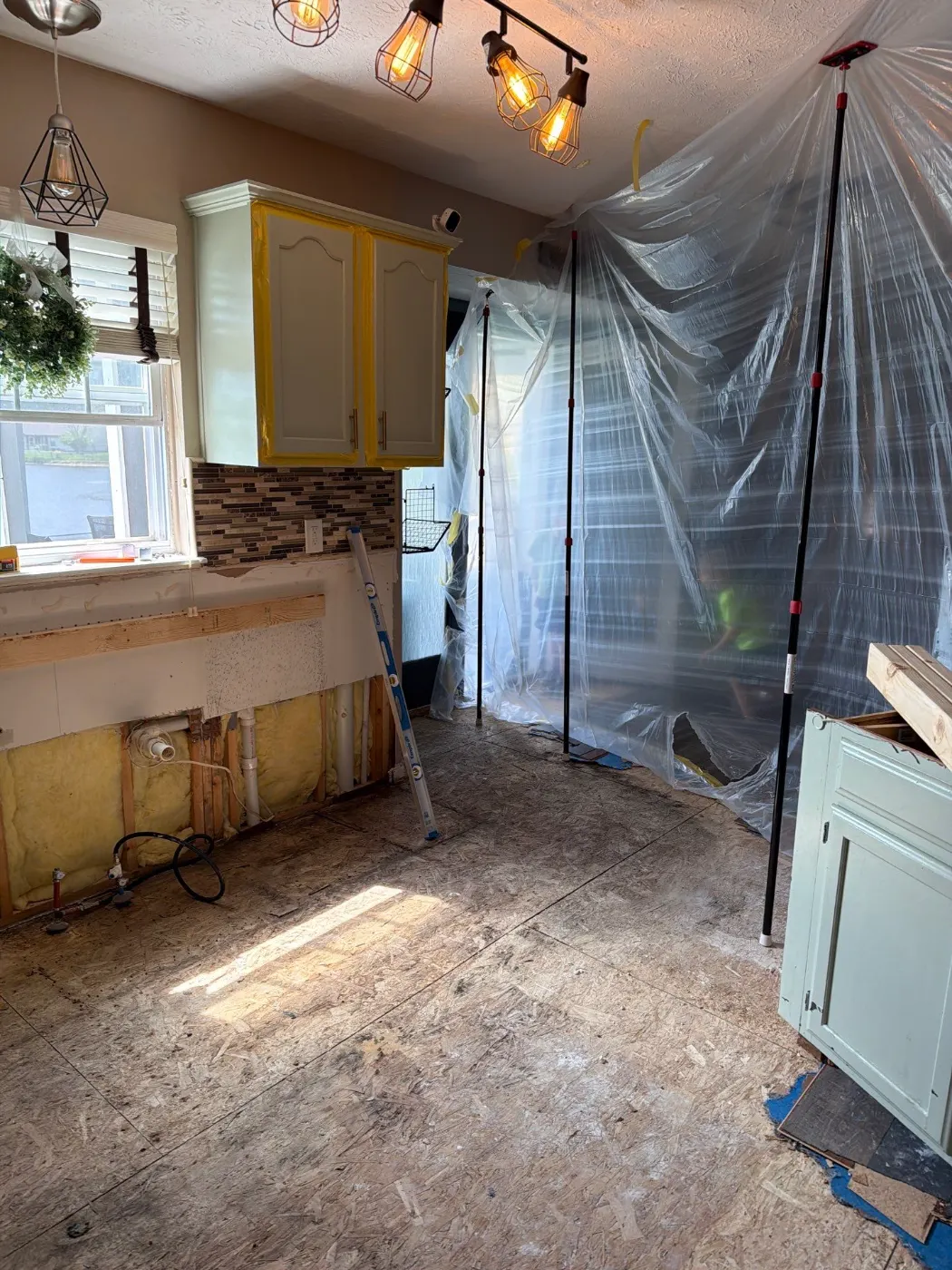
Photographs from real commercial flood damage cleanup jobs completed by our crew in Eagle Village and surrounding areas.
Commercial Flood Damage Cleanup FAQ
Questions Eagle Village property managers ask us about commercial flood damage cleanup.
Guidance and Standards for Commercial Flood Damage Cleanup
- The ANSI/IICRC S500 is the published standard for professional water damage restoration. The current edition is the Fifth Edition, 2021. IICRC S500 Standard
- EPA advises drying water damaged areas and items within 24 to 48 hours to prevent mold growth. EPA: A Brief Guide to Mold, Moisture and Your Home
Eagle Village Neighborhoods We Serve
We take commercial flood damage cleanup calls in every part of Eagle Village. Pick your neighborhood for local details.
Other Restoration Services in Eagle Village
Eagle Village Water Restoration handles the full scope of restoration work. Explore our other services below.
Water Damage Restoration in Eagle Village
24/7 emergency response. IICRC certified water restoration from extraction to full dry out.
Learn more →Basement Flooding in Eagle Village
Basement water emergencies handled fast. Extraction, drying, mold prevention.
Learn more →Sewage Cleanup in Eagle Village
Category 3 biohazard cleanup. Full containment, decontamination, structural restoration.
Learn more →Request Commercial Flood Damage Cleanup
Reach Us Directly
Our team is available 24/7 for emergencies and ready to schedule inspections during business hours.
Need Immediate Help?
For active water or mold emergencies, call us directly. We are available 24/7.