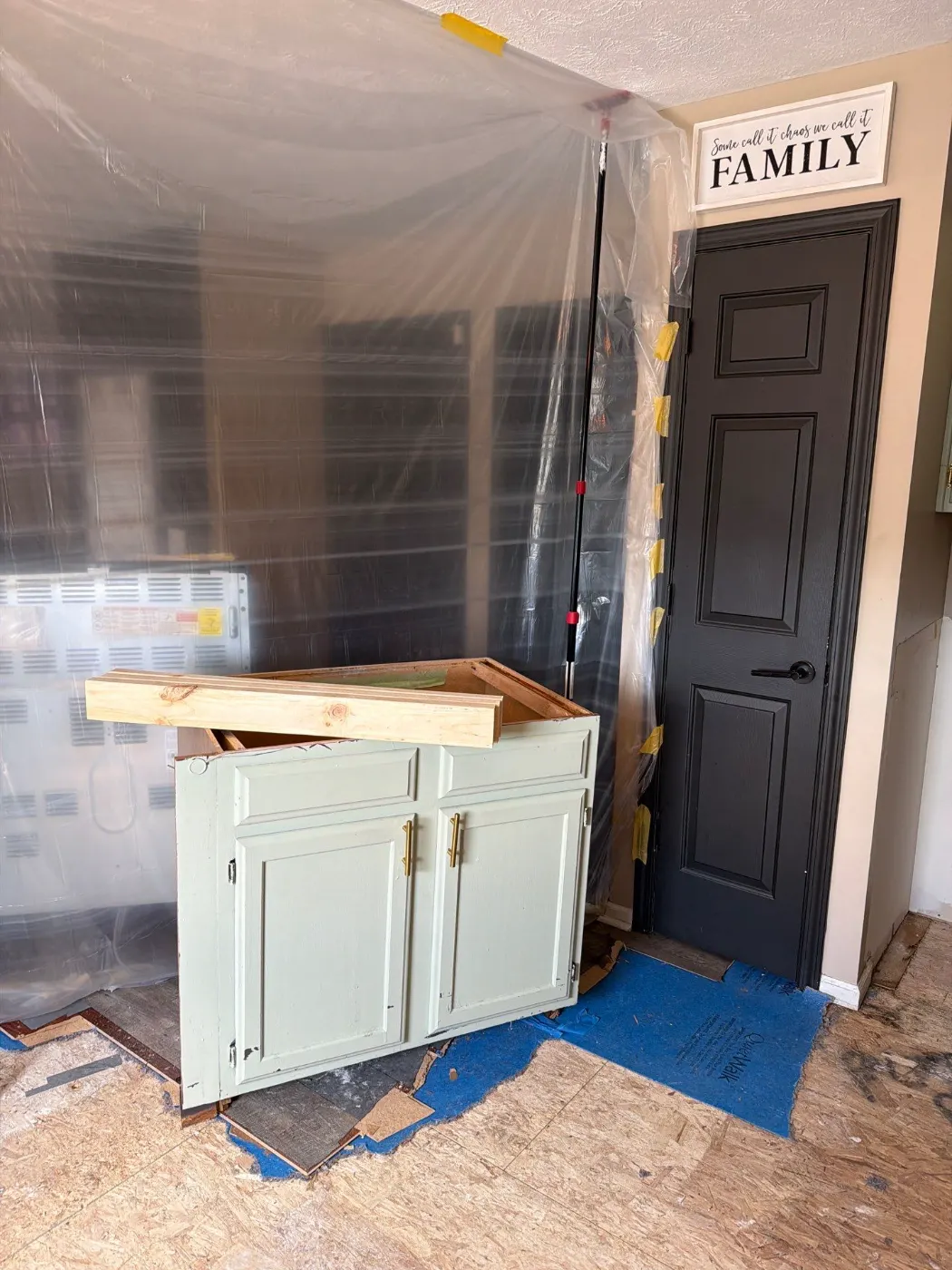
Commercial Storm Damage in Eagle Village, IN
Wind driven rain through failed roof drains or open membrane seams gets dried out at Eagle Village commercial properties.
Eagle Village Water Restoration provides Commercial Storm Damage in Eagle Village, IN. 24/7 emergency response with IICRC certified crews, and we work with your insurance carrier on approved claims. Call (463) 223-3831 for immediate dispatch.
- Service: Commercial Storm Damage for Eagle Village homeowners
- Service area: Eagle Village, IN and surrounding areas
- Response time: 24/7 live dispatch; emergency crews prioritized for Eagle Village
- Licensed and insured (License #RC21100059)
- Serving Eagle Village, IN since 2018
Commercial Storm Damage for Eagle Village Businesses
Rain driven sideways by wind hits a storefront first, and the water finds the threshold or the seam where the glass meets the sill. By the time staff arrive, it has crossed the carpet tile and wicked into the base of the fixtures. Eagle Village Water Restoration pulls it out of your Eagle Village retail space and dries under the flooring while the merchandise stays protected.
Crews work commercial storm calls across central Indiana, and Eagle Village Water Restoration takes them 24 hours a day. A crew dispatches to Eagle Village within two hours, closes the breach with a temporary dry in and starts extraction under it. During a widespread storm, buildings still taking on water go first, so say on the call whether water is still coming in.
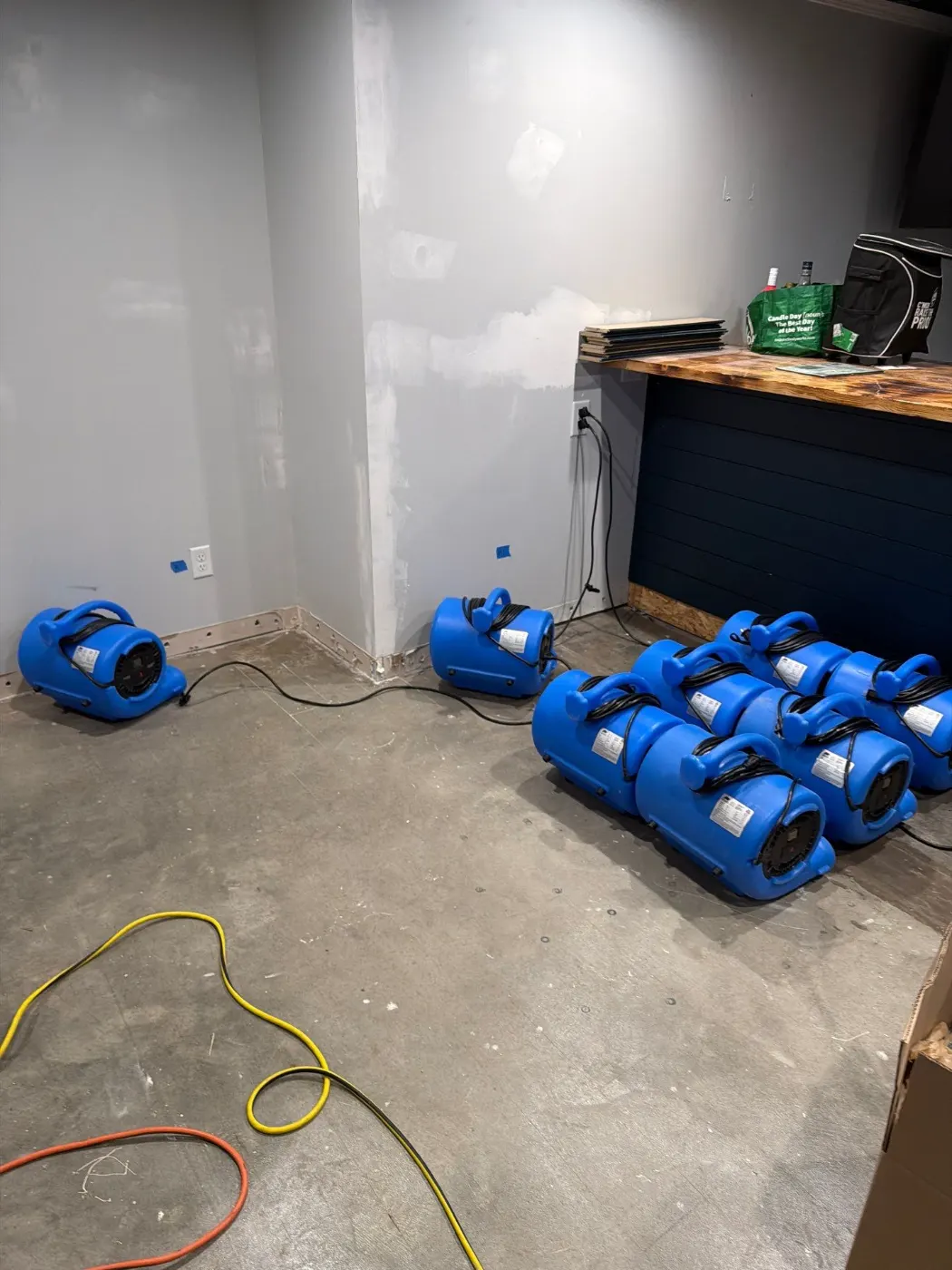
Dehumidifiers and air movers draw real amperage, and a commercial floor plate only has so many circuits to give. Eagle Village Water Restoration crews calculate the amperage before anything gets plugged in, pull from panels that can carry it, and bring distribution boxes or generator capacity when the panels can't. Equipment placement gets logged by location and run hours, which is also what the carrier's reviewer asks for later.
A one page summary at the front of the file helps a reviewer with a stack of claims to read. Eagle Village Water Restoration puts the dates, the areas affected, the equipment days and the final readings on that page, with the detailed logs behind it. The summary for your Eagle Village building is written from the daily records as the job closes.
On a wet floor plate, the first call sets up everything after it. Eagle Village Water Restoration dispatches to Eagle Village, IN commercial losses day or night with crews and equipment sized to the floor. You can forward the daily readings to your adjuster as the drying runs.
Signs You Need Commercial Storm Damage Restoration
If you notice any of these in your Eagle Village building, schedule a free inspection before the issue worsens.
Water lines on the lower walls of a dock office or receiving area
Loose or lifted metal coping on a parapet wall, with fasteners backed out of the wood blocking
Vinyl tile or glue down carpet lifting at the seams out in the middle of a floor plate
Cardboard cartons on the bottom pallet positions that have darkened and gone soft
Leak sensors or pit alarms going off in a mechanical room or IT closet during a storm
Vinyl cove base curling or pulling away from the wall along an exterior wall
Ceiling tiles sagging, stained brown at the center, or crumbling along the grid in one area of a floor
Corrosion on a fire sprinkler line or head where the pipe runs close to the roof deck
Floor boxes near the glass line with corrosion or standing water inside
Water beading on the inside of curtain wall mullions or collecting on the sill
How Eagle Village Water Restoration Handles Commercial Storm Damage
We follow these steps in order on every Eagle Village job.
First Call Intake
On the call, the team gathers where the water is entering, which areas are occupied, who holds keys and alarm codes, and who can authorize work, so the crew shows up at your Eagle Village property with the right equipment and the access it needs.
Two Hour Dispatch
A crew dispatches to your Eagle Village commercial property within two hours of the call with extraction units, dry in materials, thermal imaging and moisture meters. Work starts on arrival while the team confirms building access, after hours contacts, and which spaces have to stay open.
Water Category Call
Rain that started clean can worsen in category as it sits, so the crew classifies the water as it entered and again as it has aged. That call sets which materials get cleaned in place and which come out.
Containment and Air Control
Barriers go up at a corridor wall or partition line so one wet bay doesn't shut a whole floor. Negative air machines with HEPA filtration run where materials are coming out, and the crew keeps equipment clear of egress paths.
Equipment Out and Space Release
As each area reaches its dry goal, the equipment comes out of it and the space goes back to the tenant. The release date and final readings for every area go in the file.
Commercial Storm Damage in Eagle Village
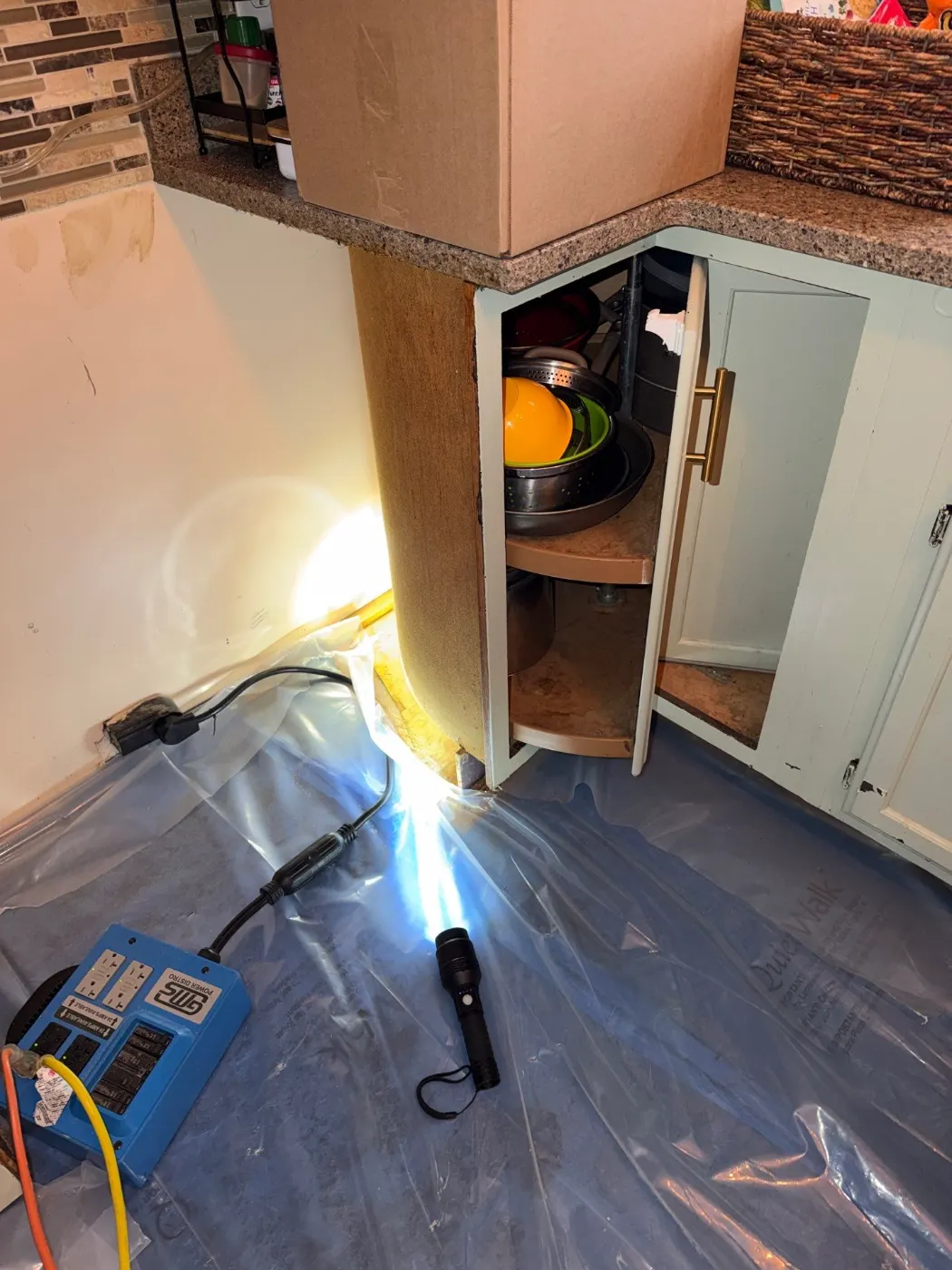
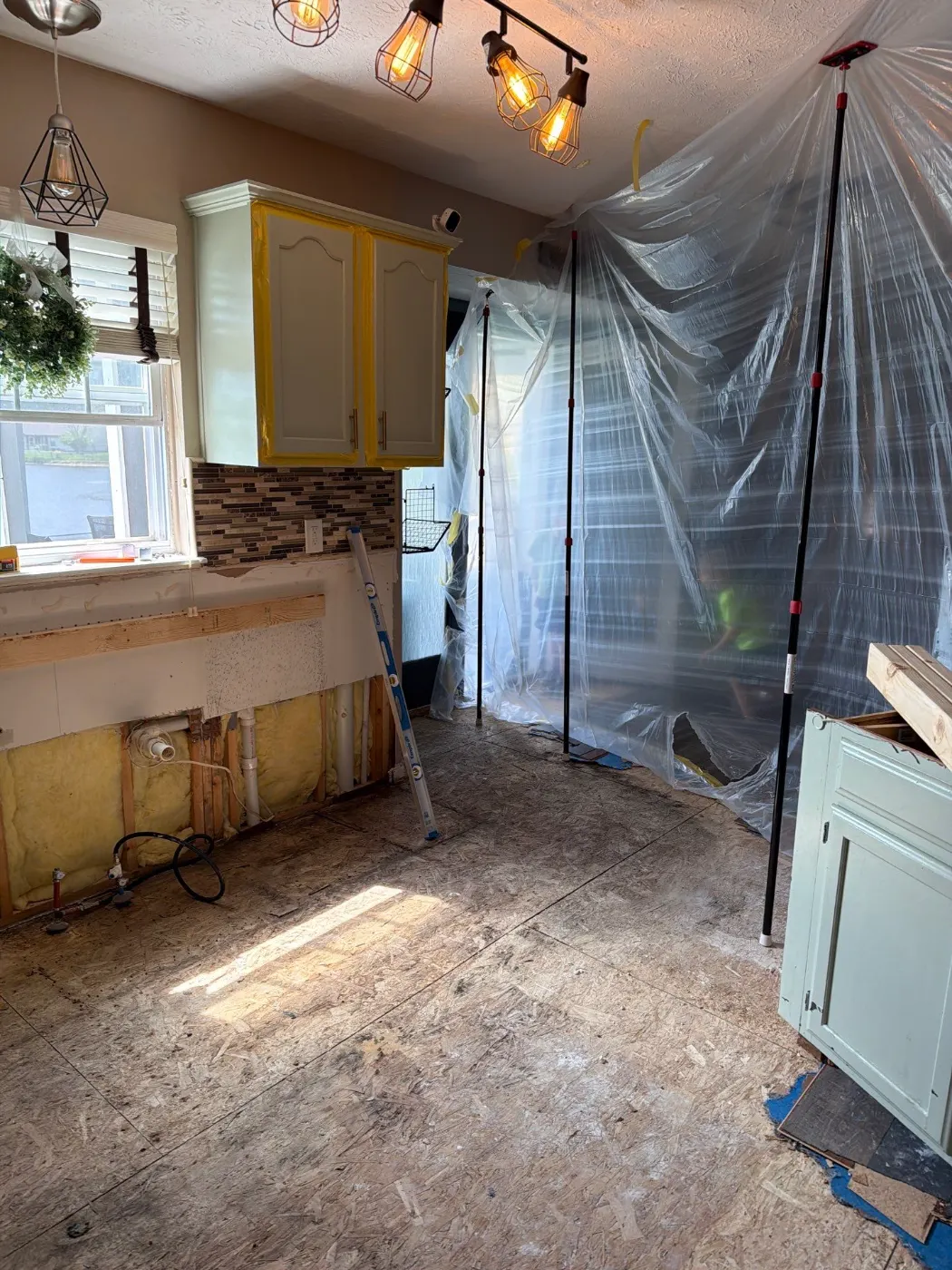
Photographs from real commercial storm damage jobs completed by our crew in Eagle Village and surrounding areas.
Commercial Storm Damage FAQ
Questions Eagle Village property managers ask us about commercial storm damage restoration.
Guidance and Standards for Commercial Storm Damage
- The National Weather Service office in Indianapolis posts summaries of recent central Indiana storm and flood events. NWS Indianapolis Event Summaries
- The ANSI/IICRC S500 is the published standard for professional water damage restoration. The current edition is the Fifth Edition, 2021. IICRC S500 Standard
Eagle Village Neighborhoods We Serve
We take commercial storm damage calls in every part of Eagle Village. Pick your neighborhood for local details.
Other Restoration Services in Eagle Village
Eagle Village Water Restoration handles the full scope of restoration work. Explore our other services below.
Water Damage Restoration in Eagle Village
24/7 emergency response. IICRC certified water restoration from extraction to full dry out.
Learn more →Basement Flooding in Eagle Village
Basement water emergencies handled fast. Extraction, drying, mold prevention.
Learn more →Sewage Cleanup in Eagle Village
Category 3 biohazard cleanup. Full containment, decontamination, structural restoration.
Learn more →Request Commercial Storm Damage Restoration
Reach Us Directly
Our team is available 24/7 for emergencies and ready to schedule inspections during business hours.
Need Immediate Help?
For active water or mold emergencies, call us directly. We are available 24/7.